


How to choose Military Boots
How to Choose Military Boots
155 people found this page helpful
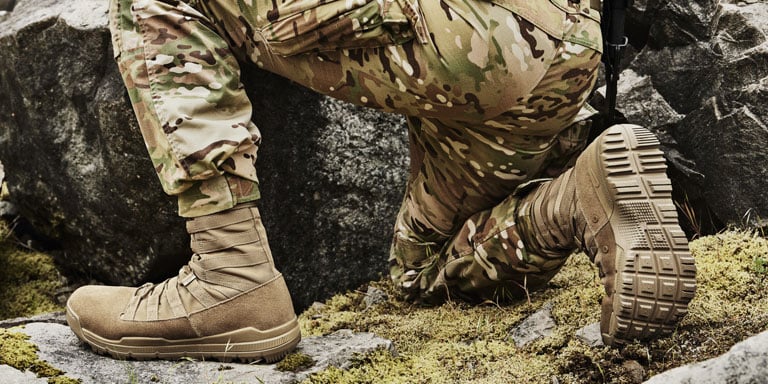
There is no single set of rules for military footwear — requirements vary by branch and even by unit. Choosing the right pair of military boots is a daunting prospect with virtually endless options. To help you find the perfect pair authorized for wear, we'll consider five key areas.
- Military Boots Types: Branch regulations regarding footwear
- Military Boots Features: Personalized footwear characteristics
- Military Boots Compliance: Rules to which personnel must adhere
- Military Boots Components: What makes up your footwear
- Military Boots Fit: How your boots should feel
Types of Military Boots
Army Boots
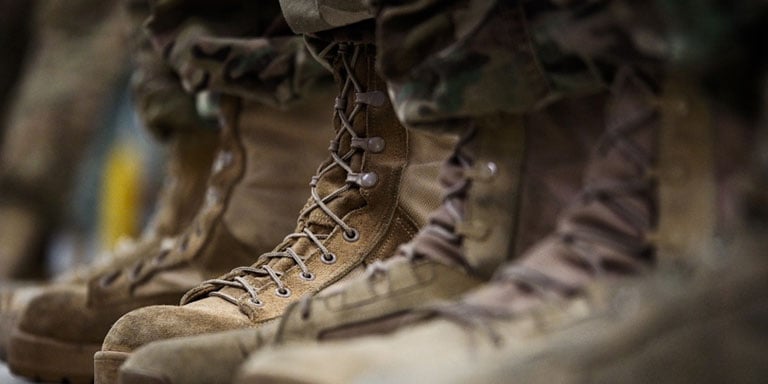
At a Glance
- Color: Coyote brown
- Height: 8"
- Toe Type: Soft toe
- Material: Flesh-out cattlehide leather
- Regulation: AR 670-1
With the arrival of the new OCP uniform, soldiers switched from desert tan boots to coyote brown boots. To meet AR 670-1 requirements, soldiers' boots must also be eight inches high and feature a soft toe.
Air Force Boots
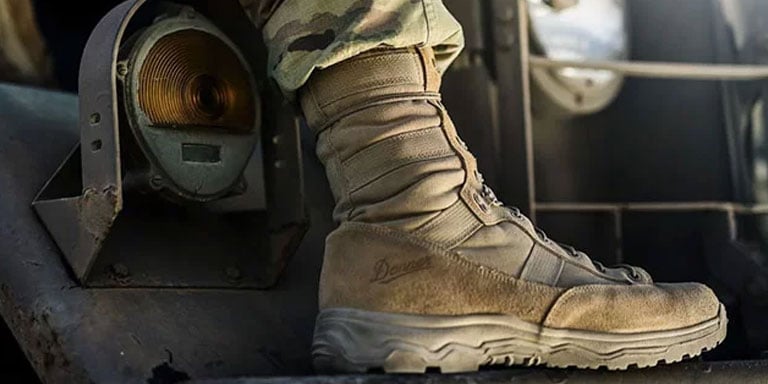
At a Glance
- Color: Coyote brown
- Height: No restrictions
- Toe Type: Soft toe or safety toe
- Material: Flesh-out cattlehide leather
- Features: Side-zip (optional)
- Regulation: AFI 36-2903
Like the Army, the Air Force also adopted the OCP uniform, which means they too must wear coyote brown boots. While the Air Force is phasing out their sage green footwear, airmen may still use boots with composite toe boxes and side zippers.
Coast Guard Boots
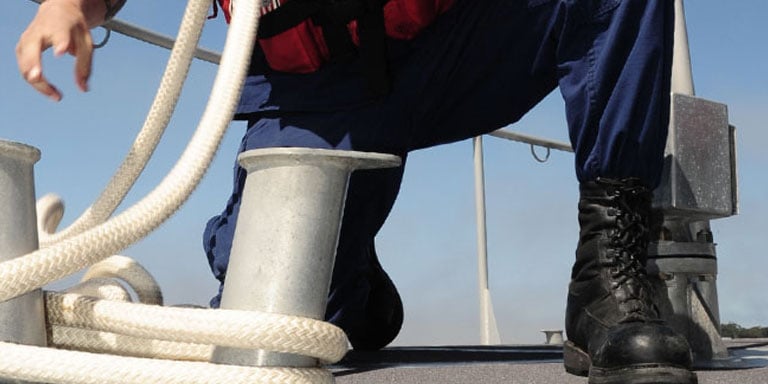
At a Glance
- Color: Black
- Height: 8" - 10"
- Toe Type: Composite Toe
- Regulation: M1020.6J
The Coast Guard requires personnel to wear black, 8" - 10" boots with a composite toe cap for protection against heavy equipment. Barring those few requirements, the list of features is up to the guardsmen. Waterproof and slip-resistant styles are popular choices.
USMC Boots
At a Glance
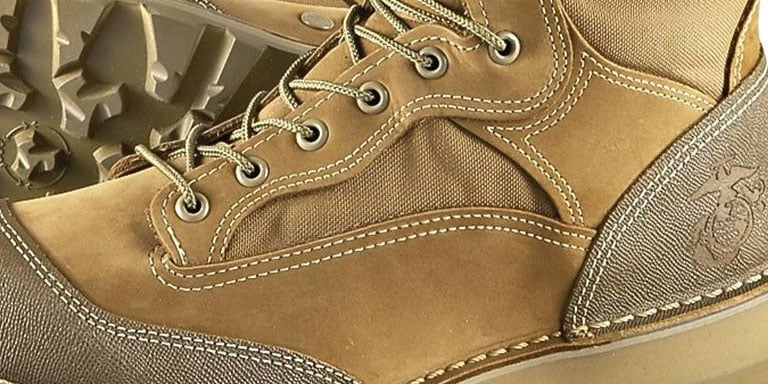
- Color: Olive mojave or coyote brown
- Height: 8"
- Toe Type: Soft or steel toe
- Material: Flesh-out cattlehide leather
- Features: Eagle, Globe and Anchor insignia
- Regulation: MCO 1020.34H
Marines' footwear choices are highly regulated. Their boots must feature an olive mojave or coyote brown colorway with the USMC Eagle, Globe and Anchor insignia on the heel. Marines may choose between soft toe or steel toe boots depending on their preference.
Navy Boots
At a Glance
- Color: Black
- Height: 8" - 9"
- Toe Type: Steel toe
- Material: Smooth Leather
- Regulation: 15665I
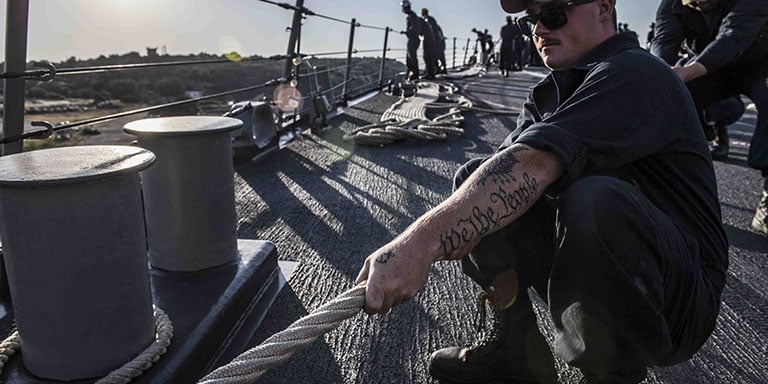
Navy sailors must wear steel toe boots that are black in color (although coyote brown or chocolate brown may be permissible in some instances). For extra slip resistance and water protection on deck, sailors may consider boots with a Vibram outsole and GORE-TEX lining.
Space Force Boots

At a Glance
- Color: Coyote brown
- Height: 8"
- Toe Type: Soft toe
- Material: Flesh-out cattlehide leather
- Regulation: AR 670-1
The United States Space Force, the news branch of the U.S. military, announced that it decided to adopt the same uniform regulations as the Army. As a result, Space Force members 8” coyote brown boots with a soft toe.
Military Boot Features
After your boots meet standard branch requirements, you have many additional choices of footwear characteristics. Here are some common options:
-
Composite Toe Military Boots
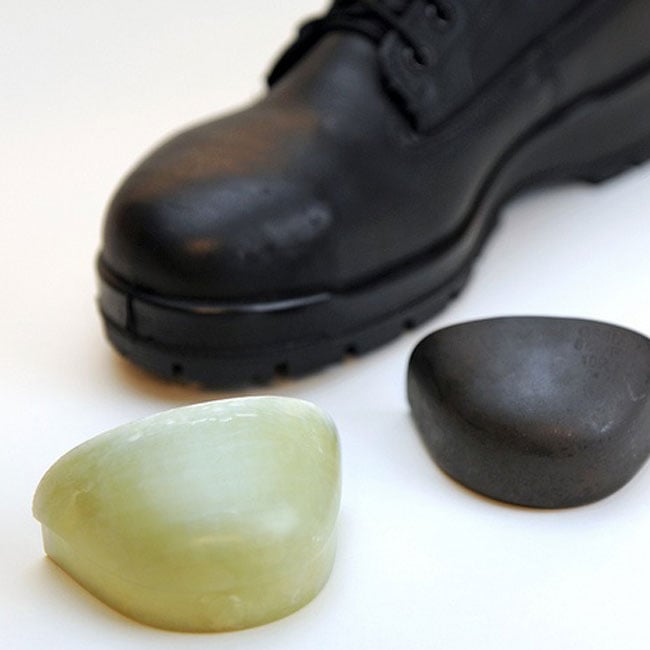
Composite toe caps are lighter than steel toe caps and much more protective than soft toe boots. Airmen and guardsmen are permitted to wear composite toe boots. Shop Composite Toe Military Boots -
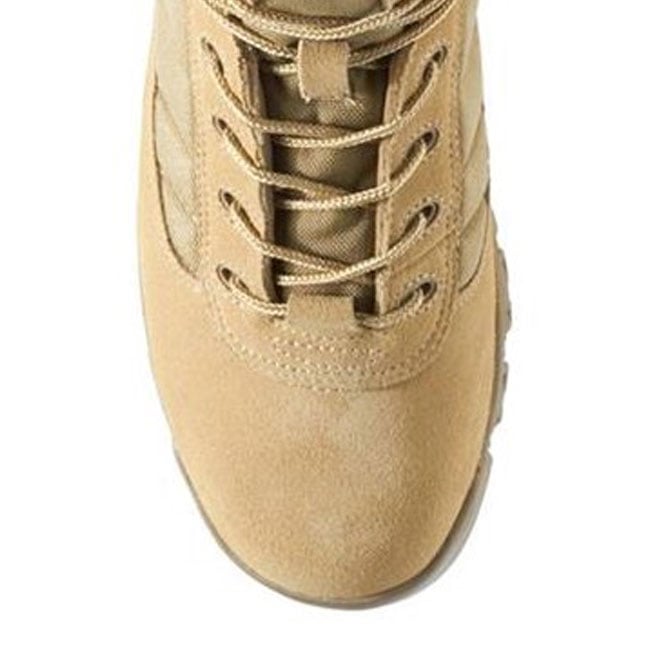
Soft Toe Military Boots
Soft toe boots are extremely lightweight and comfortable. Army soldiers most often wear them as they are the only branch without the explicit option to wear a safety toe boot. Shop Soft Toe Military Boots -
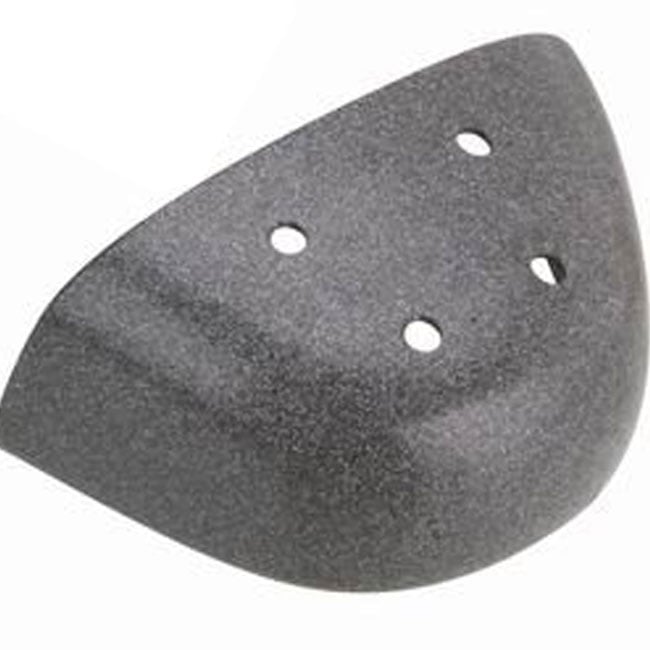
Steel Toe Military Boots
Steel toe military boots offer heavy-duty protection against harsh blows. Navy sailors are required to wear them and Marines may wear them optionally. Shop Steel Toe Military Boots -
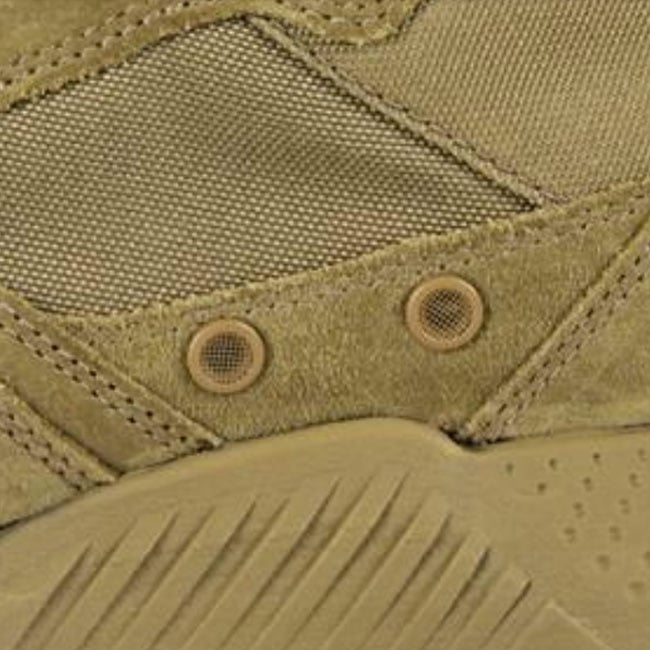
Hot Weather Military Boots
As the name implies, hot weather military boots are worn in arid, desert climates. Breathable and lightweight, they feature drain holes to let air in and sand out. Shop Hot Weather Military Boots -
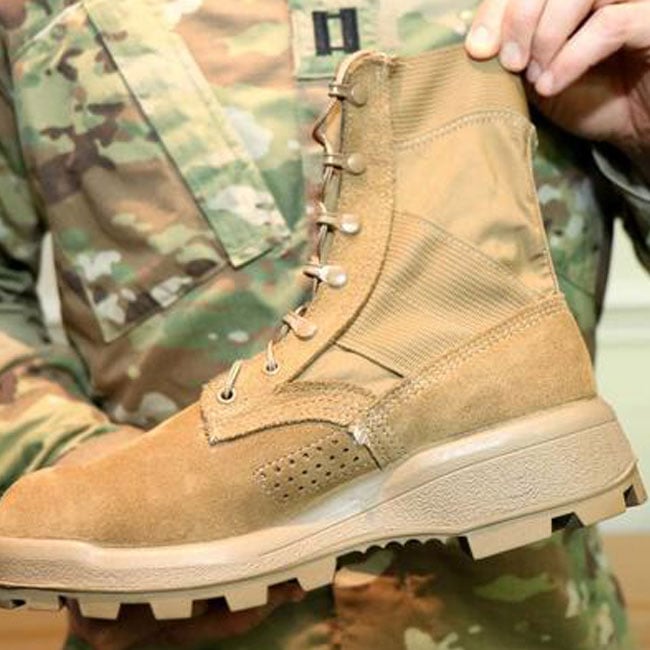
Jungle Military Boots
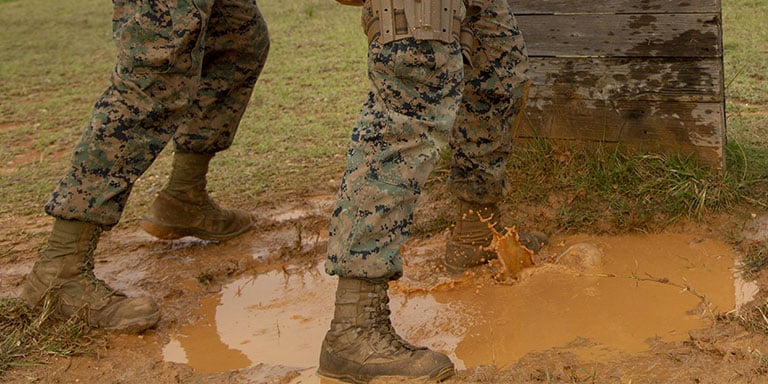
With roots in the Vietnam War, jungle boots are worn in warm, wet weather. They have wide lugs to help clean mud easily and drain holes to allow water to spill out. Shop Jungle Military Boots -
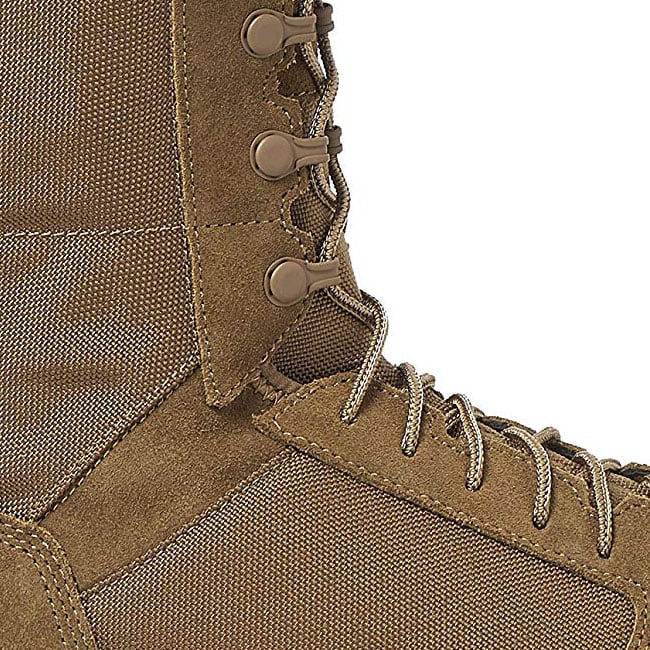
Lightweight Military Boots
Unmatched in comfort and flexibility, lightweight military boots weigh in under 25 ounces per boot. Studies from the U.S. Army Research Institute have concluded that boot weight has a significant impact on fatigue. Shop Lightweight Military Boots -
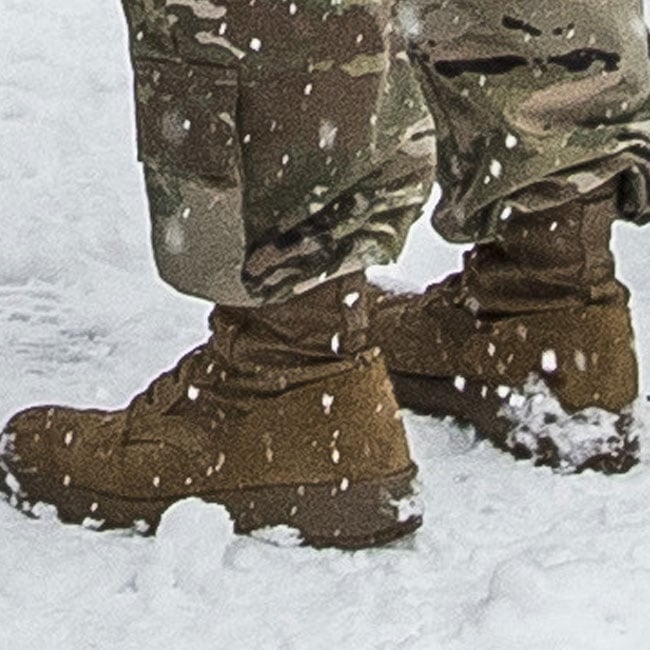
Insulated Military Boots
These boots are designed to keep the cold out. Many insulated boots are lined with Thinsulate, a synthetic fiber blend that blocks out cold air molecules. Measured in grams, Thinsulate ranges from 200G to 1000G — the higher the volume, the more insulated the boot. Shop Insulated Military Boots -
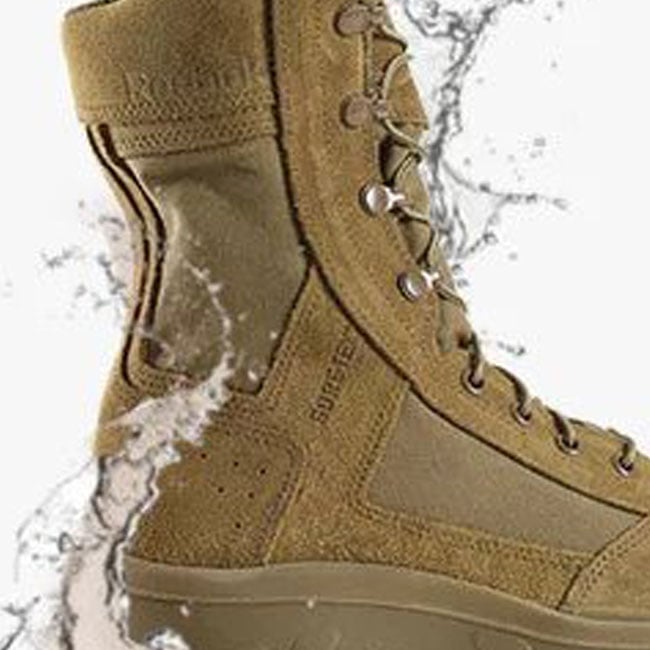
Waterproof Military Boots
Waterproof boots are designed to let out sweat and keep outside water away from your feet. One of the most popular breathable waterproof membranes on the market is GORE-TEX, a lightweight, all-weather waterproof fabric. Shop Waterproof Military Boots -
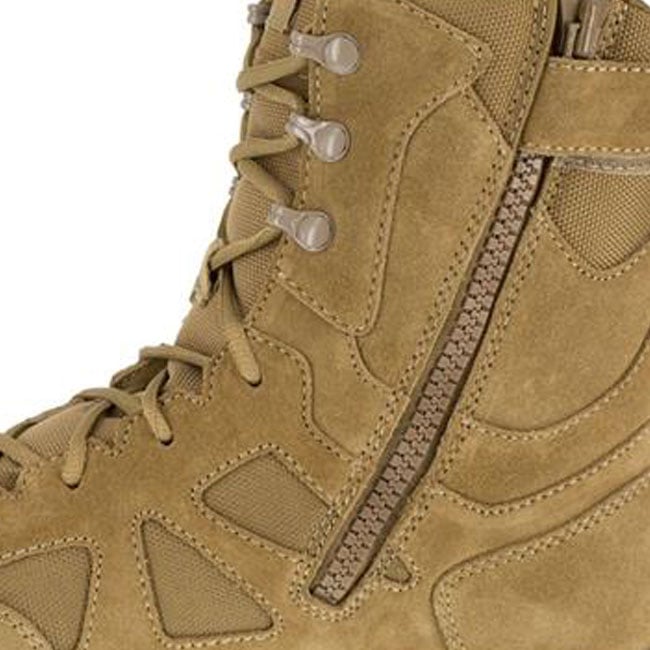
Side-zip Military Boots
Designed for personnel to get in and out of them quickly, side-zip boots offer efficiency in the field. Airmen most often wear them as they are expressly permitted in their dress code. Shop Side-zip Military Boots
Military Boots Compliance
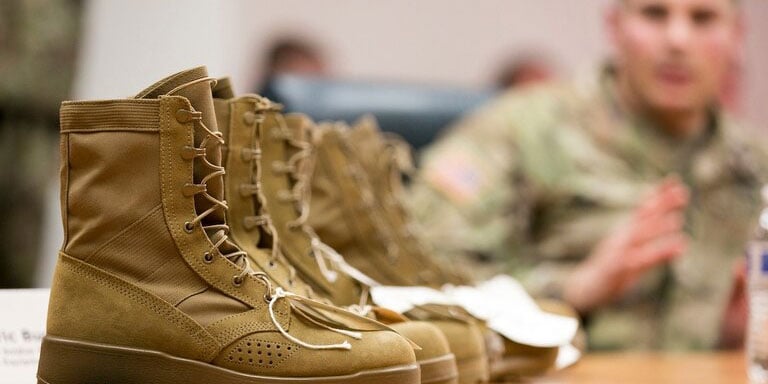
A number of compliance considerations exist to protect supply chain interruptions caused by military conflicts. We'll help you navigate the purchasing restrictions military personnel often face and examine how they fit into the framework of our national security.
 Berry Compliant
Berry-compliant boots must adhere to the Berry Amendment in which the Department of Defense stresses preference to goods produced in the United States. The materials of these products are American-made and the products themselves are manufactured on U.S. soil. Berry-compliant boots are unlikely to face conflict-based supply chain interruptions. Shop Berry Compliant Military Boots
 GSA Compliant
Congress established the Trade Agreements Act of 1979 in an attempt to create an open and fair international trading system. TAA goods are produced either in the U.S. or by an international ally. The General Services Administration (GSA), which supplies products to U.S. government agencies, defers to the TAA when selecting its goods. GSA compliance ensures boots are produced in the USA or, at the very least, by a trading ally. Shop GSA-Compliant Military Boots
 Made in the USA
"Made in the USA" is a classic stamp of approval many customers look for when buying boots. Products with this label support the American economy and American workers. Boots designated "made in the USA" are assembled in domestic factories. The materials of these boots may come from abroad which might increase the likelihood of supply chain interruptions in the event of war, but the boots themselves are made right here at home. Shop Made in USA Military Boots
Military Branch Compliance
Each branch of the U.S. Military has thorough documentation of their footwear requirements. We outlined the basic elements for each branch in the Types of Military Boots section above, and we included links to the specific regulations themselves. Remember that your commanding officer has the final say in what is approved for wear and you will need to defer to their judgment above any other published guidelines.
Military Boot Components
There are three main components of a military boot: the upper, midsole and outsole. Each component is unique and serves an important purpose in a boot's construction.
-
Military Boot Upper
-
Military Boot Midsole
-
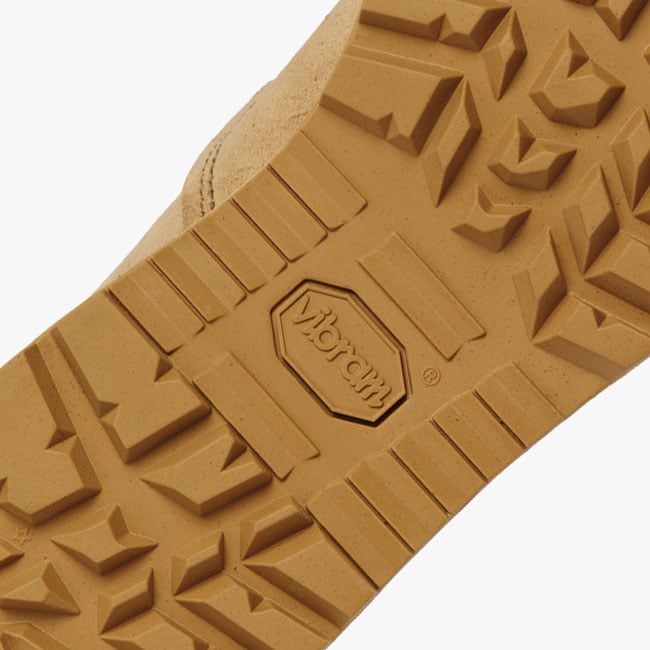
Military Boot Outsole
Military Boot Upper
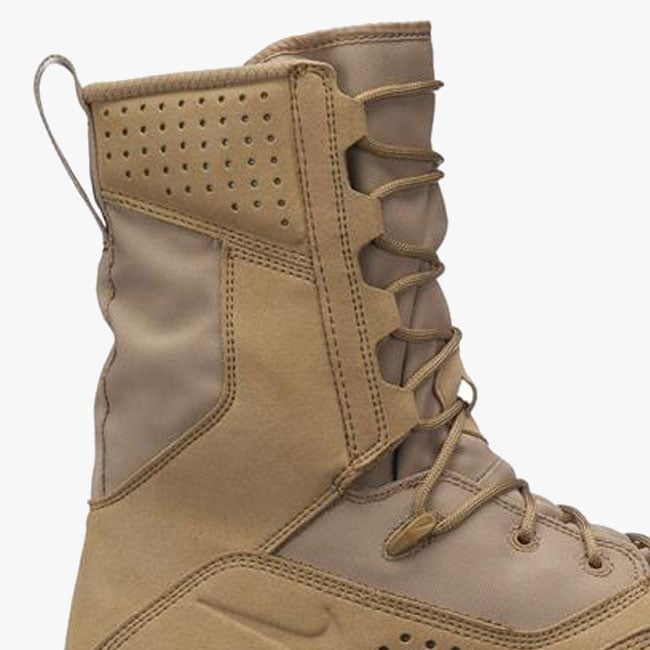
A boot's upper is the portion that wraps around your foot and (sometimes) up to and above your ankle. Uppers are made of many materials based on your service needs. Here are some upper materials to consider when choosing your boots.
Flesh-out leather
Flesh-out leather is just what its name implies: the flesh-facing portion of the leather faces outward. The Army, Air Force and Marine Corps require this kind of leather for its durability.
Suede
Also made from the flesh-facing portion of a hide, suede is known for its fuzzy texture. It is softer and more flexible than top grain leather but not as durable. Suede's flexibility means it is light, making it prime material for lightweight boots.
Genuine leather
An item made of genuine leather is simply made of animal leather (as opposed to synthetic leather). Genuine leather is one of the poorest grades of leather, often produced from leather scraps or leftovers.
Synthetic leather
This leather is not made from animal hide, but a polyester base with a polyurethane coating. It is more cost-effective than cattlehide leather but lacks quality and durability. If you need boots on a budget, synthetic leather is a good choice.
Cordura
Cordora is a fabric made of nylon and blended with cotton. Highly durable, it is resistant to scuffs and tearing. These properties make it an excellent choice of upper material.
Waterproof membranes
Waterproof membranes let water drain and keep water out. GORE-TEX is perhaps the best waterproof membrane for its flawless combination of waterproofing and breathability. GORE-TEX military boots offer comfortable, consistent levels of moisture protection.
Military Boot Midsole
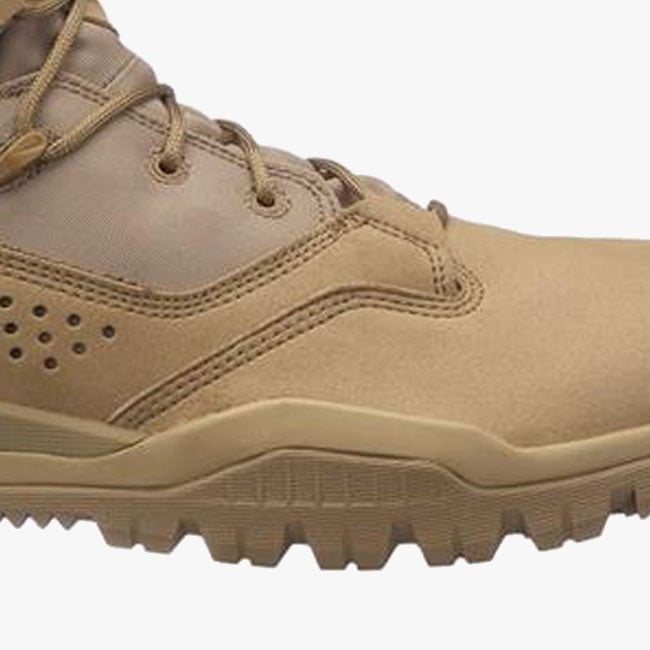
The midsole is the portion of the boot right below the removable insole. A midsole's material directly affects a boot's comfort level. Here are some common midsole materials.
Ethylene Vinyl Acetate (EVA) Cushioning
The most common midsole material, EVA, is comfortable and compression-resistant. Though EVA insoles may lose their form over time, an after-market insole can fix that. Boots with EVA midsoles help ease foot pain. Shop EVA-cushioned military boots for maximum comfort.
Polyurethane (PU)
Polyurethane midsoles are heavier than EVA, so they keep their form over a longer period. As a result, they tend to be pricier than EVA midsoles. Consider PU midsoles to avoid wear and tear in your boots.
Shanks
Shanks are steel plates embedded in a boot's midsole. They provide protection against nails or jagged metal that may pierce a boot's sole and they provide balance when carrying heavy gear. Shop military boots with steel shanks for an unmatched level of protection.
Military Boot Outsole
A boot's outsole makes direct contact with the ground. Outsoles offer protection between your feet and potential hazards you may step on while providing support, traction and comfort, too. Here are some outsole characteristics.
Rubber
Rubber is a common outsole material. One of the most popular rubber blends is Vibram. Grippy and flexible, Vibram holds its form and offers unparalleled traction on uneven surfaces. Shop our selection of rubber-soled military boots, or shop military boots with Vibram outsoles to experience the comfort and protection of a classic, high-performance rubber blend.
Polyurethane (PU)
Polyurethane is mostly used in midsoles, but some boots do have PU outsoles. Polyurethane's wear resistance and waterproof properties make it an excellent choice of outsole material. Choose boots with PU outsoles for extra protection underfoot.
Lug (tread) Pattern
Lug patterns are deep grooves in the sole of your boots. Military lug patterns are engineered with duty in mind: they are wide enough to clear themselves of mud and they give you grip on slippery surfaces. They accommodate climbing, rucking and running in sand. Consider boots with wide lugs for extra traction and balance.
Fast-roping arch
Fast roping is a dangerous technique, especially with the added weight of your gear. These high, sharp arches on the outsole of a boot help fast-ropers control the speed of their descent. Boots with these arches are especially useful for Marines, who fast-rope often.